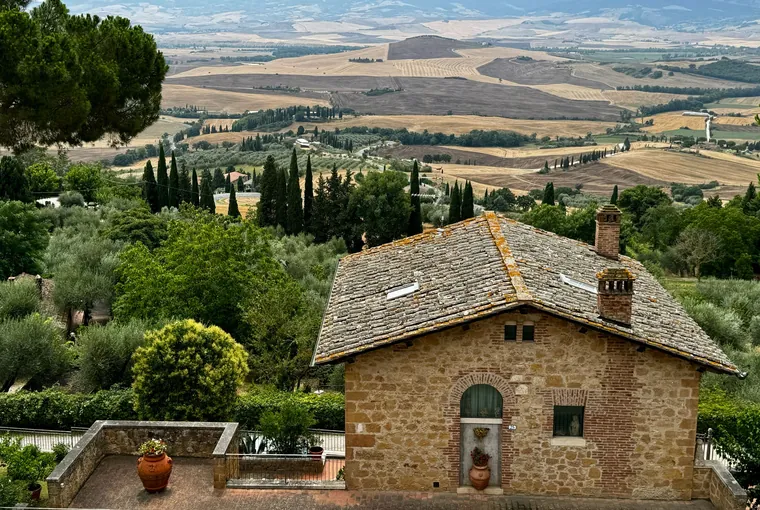
Italy · Tuscany
Sell your house in Tuscany. Without an agent.
A farmhouse in the Chianti hills, an apartment in Lucca, a villa in the Maremma: Tuscany draws buyers from all over the world. We help you get an old or rural property ready for the notary, set a realistic price and reach the right buyers.
- No agent commission
- Realistic valuation
- Paperwork guided
- Also from abroad
01 — Region
What to watch in Tuscany
- Older and rural houses often have renovations that are not in the cadastre: have an engineer or surveyor check the conformity before you list.
- Does the sale include agricultural land? Neighbouring farmers can have a right of first refusal — the notary checks this.
- Have the APE energy certificate made early; it is needed for adverts and the deed.
- A good description in English and Dutch matters here: many buyers look from abroad.
Including:
- Florence
- Siena
- Lucca
- Pisa
- Arezzo
- Chianti
- Val d'Orcia
- Maremma
02 — Our help
What we help you with
A realistic asking price based on comparable homes
A checklist of the documents for your home
Presentation, photos and where to advertise
Guidance up to the notary — also if you are not there yourself
03 — Our portal
How our portal works
You put your home online yourself, in your own account. Our team checks everything and gives you a substantiated price advice before anything is published.
Create your account
Free. In your account you manage your home, the price advice and the payment.
Add your home
At least 10 real photos (not made or edited with AI), the known defects and your own idea of the price.
Get a substantiated price advice
Our team compares your home with comparable homes and explains why it advises that price. Not convinced? Make a counter-proposal.
Publish
Choose Listing (€199) or Full guidance (from €1,500), VAT included. You only pay when your home is published.
Prefer a quick request first, without an account? Quick request
04 — Documents
Which documents do you need?
- Title deed (atto di provenienza)
- Cadastral records and floor plan (visura and planimetria catastale)
- Energy certificate (APE) — needed for adverts and the deed
- Proof that the building matches its permits (conformità urbanistica)
- Your Italian tax code (codice fiscale)
05 — The sale
How does a sale in Italy work?
Usually buyer and seller first sign a preliminary contract (compromesso) with a deposit. The sale is completed with the final deed (rogito) before a notary (notaio), who also checks the property and registers the transfer.
Free first consultationList your home
List your home with photos
Send us your photos and a few details. We help you list your home smartly on the property portals, such as Immobiliare.it and idealista, and guide you through the notary and the documents.
- On the portalsText, photos and details ready for Immobiliare.it and idealista.
- Notary and documentsWhat you need in each country, and who arranges what until the transfer.
- Free toolsSale-readiness check, document list, listing text and planner.
06 — Portals
Where buyers search in Italy
The property portals in this country, and whether you can list there yourself as a private seller.
Private owners can list their home themselves; paid options give more visibility.
Private owners can list their home themselves; paid options give more visibility.
Checked on 1 October 2026. Conditions and prices change; read the portal's own terms before you list.
Can I sell my house in Italy without an estate agent?
Yes. A notary is required for the deed, an agent is not.
I inherited a house in Italy. Where do I start?
First make sure the inheritance is registered and the cadastral data are correct. Then you can prepare the sale. We help you with the order of steps.
Do I need to travel to Italy to sign?
Not always. You can sign through a power of attorney (procura) prepared by a notary. We help you plan it.
Guides
Guides for selling in Italy
- Documents you need to sell a home in ItalyAtto di provenienza, visura catastale, planimetria, APE, cadastral and planning conformity, codice fiscale.
- Selling in Italy as a non-resident: tax on the capital gainWhen a plusvalenza is taxable, the five-year rule, the main-home and inheritance exceptions, and the imposta sostitutiva via the notaio.
- From compromesso to rogito: the sale process in Italy step by stepPurchase proposal, the preliminary contract and deposit, the deed at the notaio and what happens after signing.
- How to list your home on Immobiliare.it, idealista.it and Casa.it as a private sellerWhat to prepare before you advertise, the energy class in the listing, writing the ad and handling buyers from a distance.
MovingCompare
Moving there, or moving back after the sale?
Selling a home usually means a move as well. On MovingCompare you can compare international movers for a move to or from Italy.
Compare international movers